Physical Address
304 North Cardinal St.
Dorchester Center, MA 02124
Physical Address
304 North Cardinal St.
Dorchester Center, MA 02124

Beyond the Final Whistle
Beyond the Final Whistle
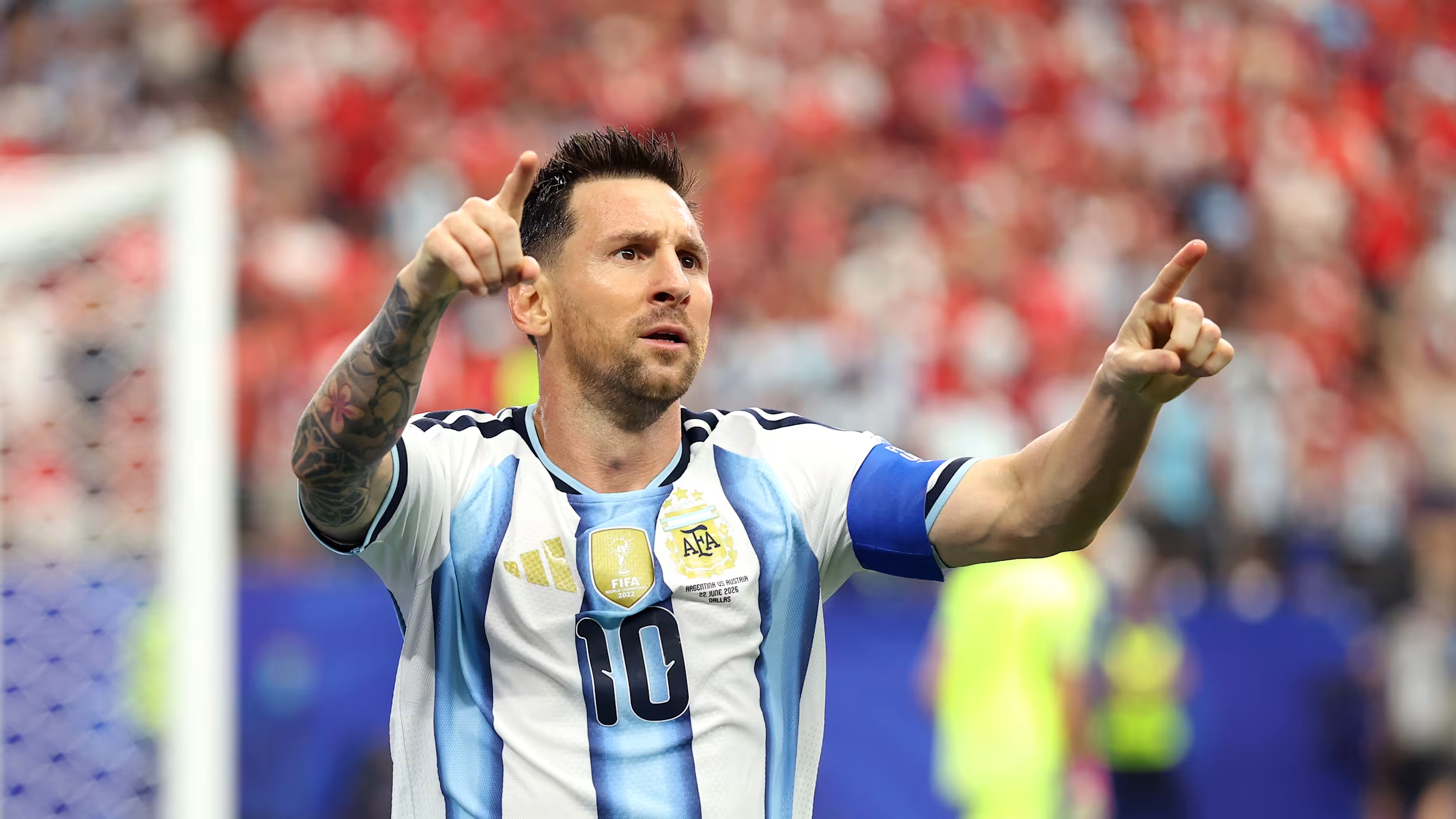
Lionel Messi has done it again. On June 22, 2026, the Argentina captain scored his 17th goal at the FIFA Men’s World Cup. This strike against Austria made him the all-time leading goalscorer in the tournament’s history. He moved past Germany’s Miroslav Klose, who had held the record with 16 goals for more than a decade.
At 38 years old, Messi keeps adding new chapters to an already legendary career. Here is how the record-breaking moment unfolded, and where it places him among the greatest scorers the World Cup has ever seen.
Messi’s record-breaking night did not start smoothly. In the 9th minute at Dallas Stadium, his teammate Lautaro Martínez won a penalty for Argentina. Messi stepped up to take it himself, since he needed just one more goal to claim the record outright. However, his run-up faltered, and the shot went wide of the right post. For a moment, the record had to wait.
His teammates did not let the setback stand for long. They kept pushing forward, determined to help their captain reach the milestone.
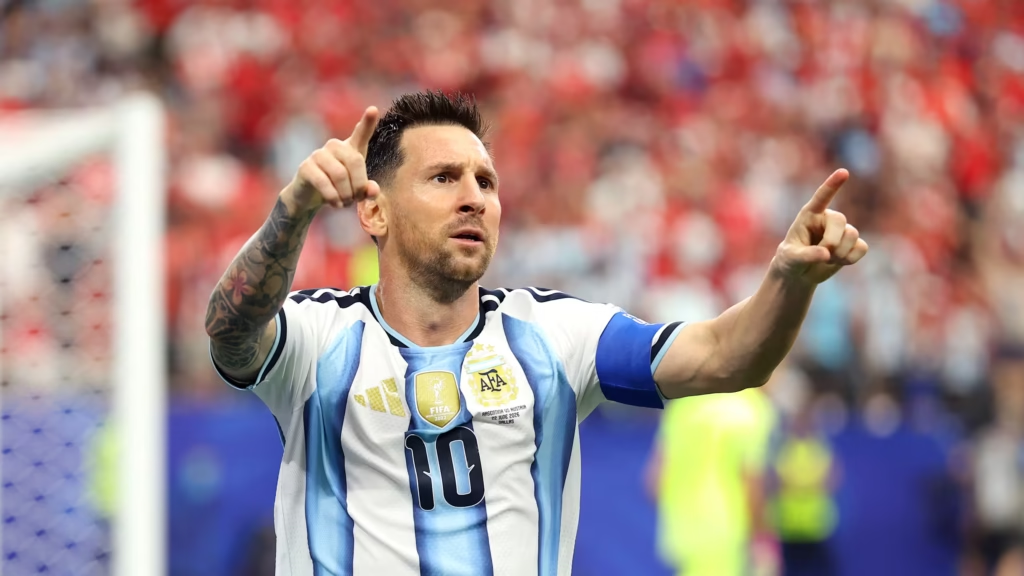
Credits: Picture by Charlotte Wilson/Getty Images
The history-making moment came in the 38th minute. Defender Facundo Medina found Messi with a low pass near the edge of the box. Messi met it for the first time and placed his shot into the bottom-left corner, beating Austria goalkeeper Alexander Schlager. The goal gave Argentina a 1-0 lead and gave Messi sole possession of the World Cup’s all-time scoring record.
It was his fourth goal of the 2026 tournament. He had already scored a hat-trick in Argentina’s opening match against Algeria, which pulled him level with Klose on 16 goals. That hat-trick also made him the oldest player ever to score three goals in a single World Cup match, a record previously held by his longtime rival, Cristiano Ronaldo.
Messi’s pursuit of this record began two decades ago. He scored his first World Cup goal in 2006, coming off the bench as a 19-year-old against Serbia and Montenegro. Since then, he has found the net in nearly every tournament he has played, missing the scoresheet only in 2010.
His most memorable World Cup campaign came in 2022. Messi scored seven goals that year, including two in the final, and lifted the trophy after Argentina beat France on penalties. That triumph completed his collection of honors, leaving only this all-time scoring record within reach.
Now, at the 2026 World Cup, Messi is playing in his sixth tournament, the most appearances by any player in men’s World Cup history. He has also become Argentina’s all-time leading scorer across all competitions, with well over 100 international goals to his name.
What makes Messi’s achievement remarkable is how it was built. Unlike some record holders who reached their tallies in just one or two tournaments, Messi has spread his goals across six different World Cups, spanning twenty years. This long-term consistency, combined with his continued sharpness at age 38, sets his record apart.
Klose, by comparison, scored his 16 goals across four tournaments between 2002 and 2014. Before him, Brazil’s Ronaldo Nazário held the record with 15 goals, and West Germany’s Gerd Müller held it before that, with 14.
| Rank | Player | Country | Goals | World Cups Played |
|---|---|---|---|---|
| 1 | Lionel Messi | Argentina | 18 | 6 (2006–2026) |
| 2 | Miroslav Klose | Germany | 16 | 4 (2002–2014) |
| 2 | Kylian Mbappé | France | 16 | 3 (2018–2026) |
| 4 | Ronaldo Nazário | Brazil | 15 | 4 (1994–2006) |
| 5 | Gerd Müller | West Germany | 14 | 2 (1970–1974) |
| 6 | Just Fontaine | France | 13 | 1 (1958) |
| 7 | Pelé | Brazil | 12 | 4 (1958–1970) |
| 8 | Sándor Kocsis | Hungary | 11 | 1 (1954) |
| 8 | Jürgen Klinsmann | Germany | 11 | 3 (1990–1998) |
| 10 | Seven players tied | Various | 10 | Varies |
*Mbappé’s tally is still growing, as he remains an active player in the 2026 tournament.
Messi’s record may not stay unmatched forever. France’s Kylian Mbappé sits in fourth place with 14 goals and was set to face Iraq later the same day. At just 27, Mbappé has time on his side. He could realistically play in at least one more World Cup after this one, giving him more chances to close the gap.
For now, though, the record belongs to Messi alone. As Argentina continues its push to defend the title it won in Qatar, the 38-year-old shows no signs of slowing down. Whatever happens for the rest of the tournament, he has already secured a place at the very top of World Cup history.