Physical Address
304 North Cardinal St.
Dorchester Center, MA 02124
Physical Address
304 North Cardinal St.
Dorchester Center, MA 02124

Beyond the Final Whistle
Beyond the Final Whistle
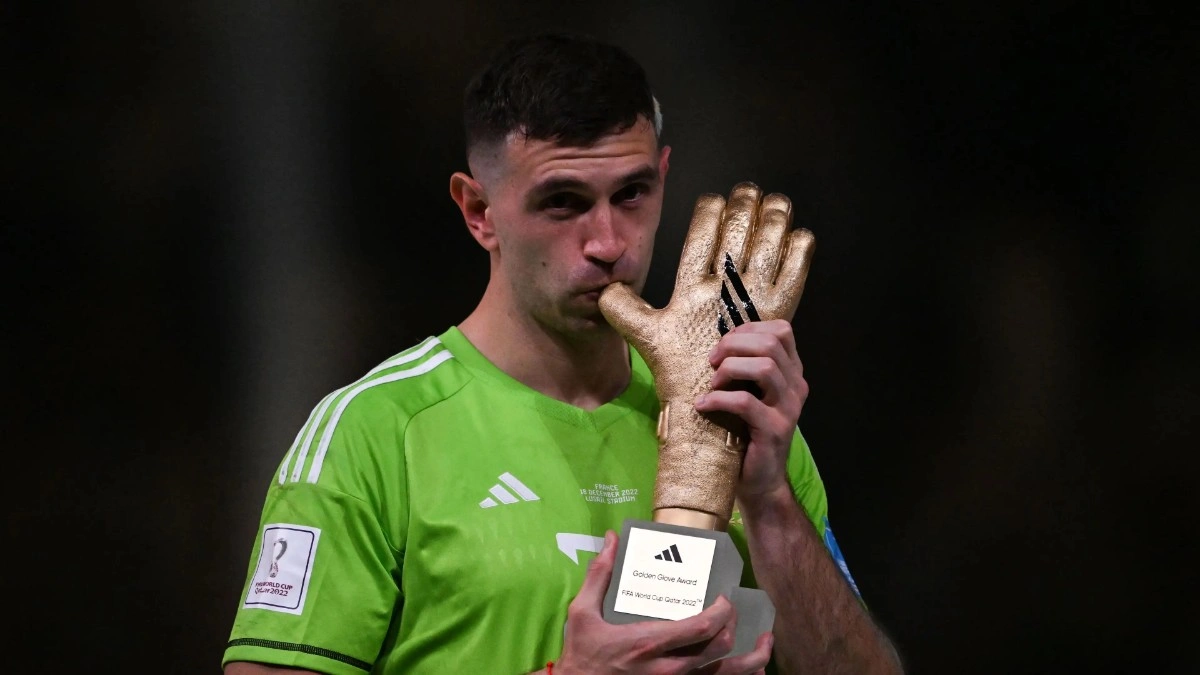
The Golden Glove remains one of the most prestigious individual honors in World Cup history, celebrating elite goalkeepers who command the global stage. Among its iconic recipients are masters of the craft like Thibaut Courtois and Manuel Neuer.
Joining this legendary company is Argentina’s Emiliano Martínez, who followed up his crucial role in his country’s 2022 FIFA World Cup victory by claiming the 2026 Golden Glove, a testament to his brilliance after keeping three clean sheets across seven complete matches.
This list covers every Golden Glove winner since the award began, along with the goalkeepers who earned recognition before it existed.
FIFA introduced the award in 1994 as the Lev Yashin Award, named after the legendary Soviet goalkeeper. It was renamed the Golden Glove in 2010, alongside the Golden Boot and Golden Ball rebrand.
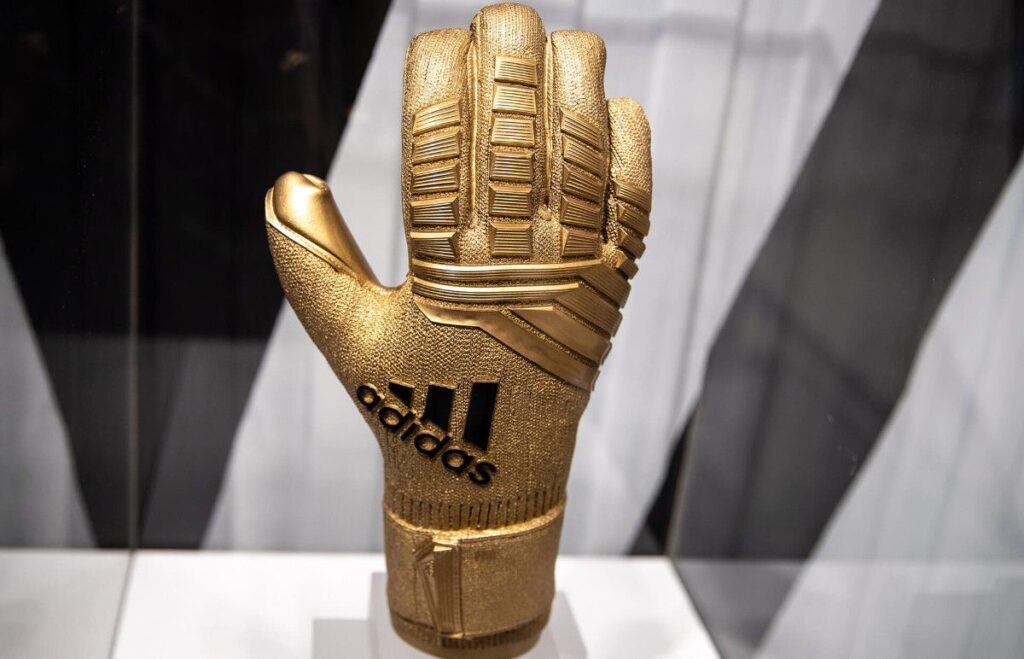
The FIFA Technical Study Group picks the winner. They weigh clean sheets, goals conceded, key saves, and how far the goalkeeper’s team advances. If two goalkeepers tie, the one whose team progressed further wins. A second tiebreaker looks at total saves, and a third looks at minutes played.
| Year | Winner | Country | Host | Key Stats |
|---|---|---|---|---|
| 1994 | Michel Preud’homme | Belgium | USA | 4 appearances, 2 clean sheets, 4 goals conceded |
| 1998 | Fabien Barthez | France | France | 7 matches, 5 clean sheets, 2 goals conceded |
| 2002 | Oliver Kahn | Germany | South Korea/Japan | 7 matches, 5 clean sheets, 3 goals conceded |
| 2006 | Gianluigi Buffon | Italy | Germany | 7 matches, 5 clean sheets, 2 goals conceded |
| 2010 | Iker Casillas | Spain | South Africa | 7 matches, 5 clean sheets, 2 goals conceded |
| 2014 | Manuel Neuer | Germany | Brazil | 7 matches, 4 clean sheets, 4 goals conceded |
| 2018 | Thibaut Courtois | Belgium | Russia | 7 matches, 3 clean sheets, 6 goals conceded |
| 2022 | Emiliano Martinez | Argentina | Qatar | 7 matches, 3 clean sheets, 3 penalty saves in shootouts |
No goalkeeper has won the award twice since its introduction in 1994. Every edition has produced a fresh face.
Preud’homme became the first official winner at the USA World Cup. The Belgian made four appearances and helped his team reach the round of 16, keeping two clean sheets along the way.
Barthez backstopped host nation France to its maiden World Cup title. He played all seven matches, conceded only two goals across the tournament, and saved a penalty during the run.
Kahn remains the only goalkeeper to win the Golden Glove and the Golden Ball in the same tournament. He played every minute of Germany’s campaign and conceded just three goals before Germany lost the final to Brazil.
Buffon anchored Italy’s title-winning run in Germany. He played all 690 possible minutes, kept five clean sheets, and let in only two goals across seven matches.
Casillas captained Spain to its first World Cup title in South Africa. He featured in every match, conceded just two goals, and made a crucial penalty save during the knockout stage.
Neuer popularized the modern sweeper-keeper role at the Brazil World Cup. He played every minute for Germany, conceded four goals, and helped his side lift the trophy after beating Argentina in the final.
Courtois carried Belgium to a third-place finish in Russia, its best World Cup result. He played all seven matches and made more saves than any other goalkeeper in the tournament.
Martinez became a shootout specialist for Argentina in Qatar. He saved penalties in the quarter-final against the Netherlands and in the final against France, then made a late save in extra time that helped seal the title.
The Golden Glove award did not exist before 1994. FIFA’s All-Star Team for each tournament named a goalkeeper instead, and these selections are widely treated as the unofficial precursors to the award.
| Year | Best Goalkeeper | Country |
|---|---|---|
| 1930 | Enrique Ballestrero | Uruguay |
| 1934 | Ricardo Zamora | Spain |
| 1938 | Frantisek Planicka | Czechoslovakia |
| 1950 | Roque Maspoli | Uruguay |
| 1954 | Gyula Grosics | Hungary |
| 1958 | Harry Gregg | Northern Ireland |
| 1962 | Viliam Schrojf | Czechoslovakia |
| 1966 | Gordon Banks | England |
| 1970 | Ladislao Mazurkiewicz | Uruguay |
| 1974 | Sepp Maier | West Germany |
| 1978 | Ubaldo Fillol | Argentina |
| 1982 | Dino Zoff | Italy |
| 1986 | Jean-Marie Pfaff | Belgium |
| 1990 | Luis Gabelo Conejo / Sergio Goycochea | Costa Rica / Argentina |
Note that 1942 and 1946 are missing because FIFA did not hold a World Cup in those years due to World War II.
The 2026 World Cup, hosted across the USA, Canada, and Mexico, expanded to 48 teams for the first time. The tournament is currently underway, and no Golden Glove winner has been confirmed yet since the knockout rounds are still to come.
Going into the tournament, sportsbooks and pundits favored a few names for the award:
This list will get an update once the tournament concludes and FIFA’s Technical Study Group announces the official winner.
FIFA introduced it in 1994 as the Lev Yashin Award. The Golden Glove name arrived in 2010.
FIFA’s Technical Study Group selects the winner after evaluating clean sheets, goals conceded, key saves, and the goalkeeper’s overall impact on his team’s run.
No. Every World Cup since 1994 has had a different Golden Glove winner.
Oliver Kahn achieved this rare double at the 2002 World Cup.
FIFA awards it to the goalkeeper whose team advanced further in the tournament. If that is also tied, total saves and then minutes played act as further tiebreakers.