Physical Address
304 North Cardinal St.
Dorchester Center, MA 02124
Physical Address
304 North Cardinal St.
Dorchester Center, MA 02124

Beyond the Final Whistle
Beyond the Final Whistle
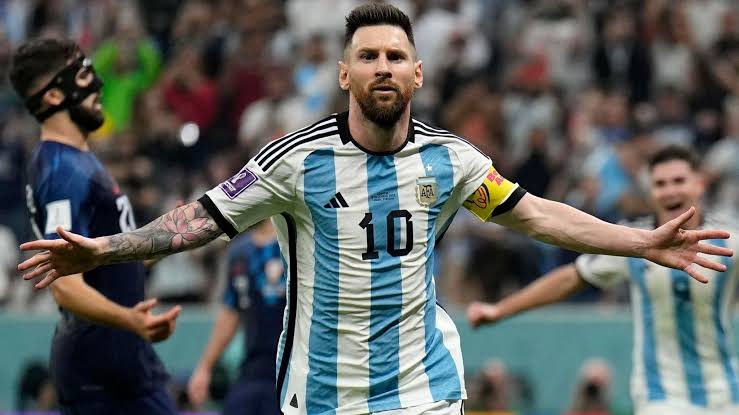
The FIFA World Cup has produced some of the greatest individual scoring feats in football. Strikers from different eras have chased the same record across decades, and the chart has changed dramatically during the ongoing 2026 tournament.
Lionel Messi broke a 12-year-old record on June 22, 2026, and Kylian Mbappé moved level for second place on the same day. This list ranks the leading marksmen in World Cup history and explains how each player built their tally.
All figures are accurate as of June 22, 2026, and may shift again as the 2026 knockout stage continues.
| Rank | Player | Country | Goals | World Cups Played |
|---|---|---|---|---|
| 1 | Lionel Messi | Argentina | 18 | 6 (2006–2026) |
| 2 | Miroslav Klose | Germany | 16 | 4 (2002–2014) |
| 2 | Kylian Mbappé | France | 16 | 3 (2018–2026) |
| 4 | Ronaldo Nazário | Brazil | 15 | 4 (1994–2006) |
| 5 | Gerd Müller | West Germany | 14 | 2 (1970–1974) |
| 6 | Just Fontaine | France | 13 | 1 (1958) |
| 7 | Pelé | Brazil | 12 | 4 (1958–1970) |
| 8 | Sándor Kocsis | Hungary | 11 | 1 (1954) |
| 8 | Jürgen Klinsmann | Germany | 11 | 3 (1990–1998) |
| 10 | Seven players tied | Various | 10 | Varies |
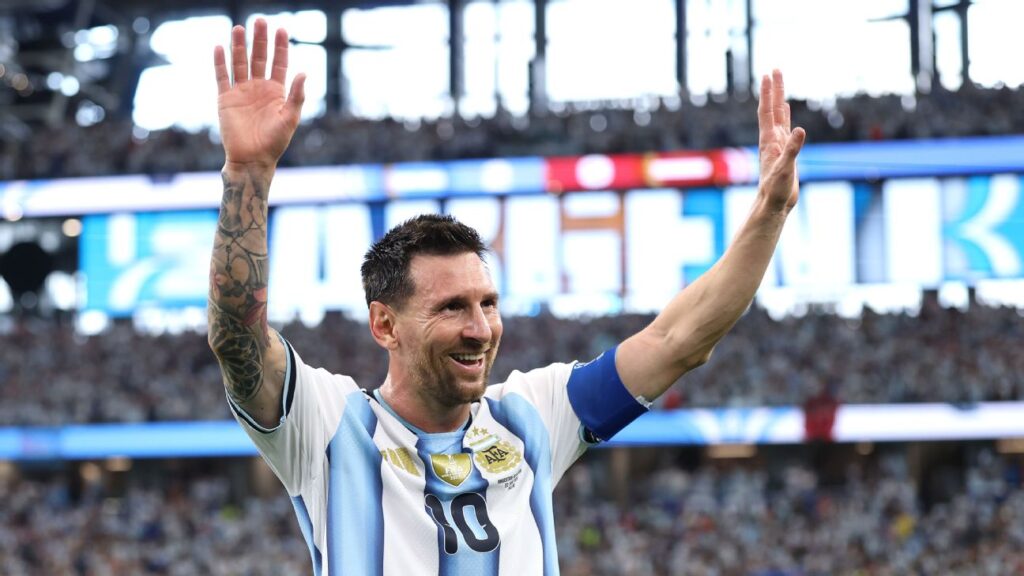
Messi sits alone at the top of the all-time list. He reached the milestone during Argentina’s 2-0 win over Austria, scoring twice to move past Miroslav Klose.
He opened the 2026 tournament with a hat-trick against Algeria, his first at a World Cup, and has now scored across six different editions: 2006, 2010, 2014, 2018, 2022, and 2026. He has played 28 World Cup matches, also a record, and has scored five goals at the 2026 tournament so far. Messi already led Argentina to the title in 2022, where he netted seven goals and won a second Golden Ball.
Klose held the outright record for 12 years before Messi overtook him. He built his total steadily across four World Cups: five goals in 2002, five in 2006, four in 2010, and two in 2014. His standout moment came in Germany’s 7-1 win over Brazil in the 2014 semi-final, where his equalizer pushed him past Ronaldo Nazário for what was then the record. Klose played 24 World Cup matches and remains Germany’s leading scorer in the competition.
Mbappé drew level with Klose on June 22, 2026, after a brace in France’s 3-0 win over Iraq. He is the youngest player on this list and the only one still adding to his total at a rapid pace.
His goals have come across three World Cups: four in 2018, eight in 2022 (where he won the Golden Boot and scored a final hat-trick against Argentina), and four so far in 2026. He needed just 16 matches to reach 16 goals, the fastest rate among the top scorers in this list.
Ronaldo, often called “O Fenômeno,” scored across four World Cups between 1994 and 2006. He delivered eight goals during Brazil’s title-winning run in 2002, taking the Golden Boot that year, and remains the only player to score eight goals in World Cup knockout matches in a single career until Mbappé matched the feat in 2022. He needed only 19 matches for his 15 goals, one of the best goals-per-game ratios on this list.
Müller held the record for over three decades before Ronaldo passed him in 2006. He scored 10 goals in 1970 alone, one of only three players to reach double figures in a single World Cup, and added four more in 1974 as West Germany won the title on home soil. He needed just 13 matches for his 14 goals, the highest scoring rate of any player in the top five.
Fontaine’s record stands apart from every other name on this list. He scored all 13 of his goals in a single tournament, the 1958 World Cup in Sweden, and never played in another edition. His tally remains the most goals scored by any player in one World Cup, a mark that has survived for nearly 70 years without a serious challenge.
Pelé scored across four World Cups between 1958 and 1970 and won three titles with Brazil during that span. He became the youngest player to score a World Cup hat-trick at 17 years and 244 days old, doing so against France in the 1958 semi-final, and capped that tournament with two goals in the final. He is also credited with the most assists by any player in a single World Cup since detailed records began in 1966.
Kocsis scored all 11 of his World Cup goals in 1954, his only appearance at the tournament. He found the net in every group and knockout match before the final, including back-to-back hat-tricks within four days, as Hungary reached the final before losing to West Germany.
Klinsmann reached 11 goals across three World Cups and remains one of three German players in the all-time top ten, alongside Klose and Müller. His goals helped West Germany win the title in 1990 and supported Germany’s runs in 1994 and 1998.
Seven players share the next spot on the all-time list with 10 goals each: Helmut Rahn (Germany), Gabriel Batistuta (Argentina), Gary Lineker (England), Téofilo Cubillas (Peru), Thomas Müller (Germany), Grzegorz Lato (Poland), and Harry Kane (England).
Mbappé could overtake Messi outright if he continues scoring through the knockout rounds, and he already holds the record for the fastest path to 16 goals.
Erling Haaland has also entered the conversation with four goals in the early stages of the 2026 tournament, though he remains well outside the top 10 for now. Since the all-time chart has shifted twice in one week, this list will likely need another update before the 2026 final.
Lionel Messi leads the all-time list with 18 goals, a record he set during the 2026 World Cup.
Yes. Kylian Mbappé sits just two goals behind Messi and is still playing in the tournament, so the gap could close further before the final.
Just Fontaine of France holds this record with 13 goals, all scored during the 1958 World Cup.
Germany has three players in the top 10: Klose, Müller, and Klinsmann.